I worked on a project for seven weeks to create the application of LinkedIn in Pharmaceutical Marketing. The idea was to make use of the potential of the website as a professional tool that extends far beyond the general perception of looking for a job or self-marketing. Through this, the project sought a better interactive online network in the pharmaceutical industry where LinkedIn is a deliberate method of professional competence building and working together.
The Project Proposal
Corresponding blog: Creating the Proposal and Bibliography
I wrote a project proposal as a way of formally planning and designing my goals for this project. By committing the proposal to paper, I was able to readily set down the purpose of my project, what I aim to achieve, and how I am going to achieve it. It also prompted me to be more precise in where I’m heading, rather than having something vague in mind. One of the most helpful aspects of the process may be to identify and think about my audience—knowing who it is that I’m reaching out to, why they’re significant to my project, and how I can get their attention in the best way. By doing so, I am not only defining my objectives but also giving my project a vision and strong base to grow from.
Below is my project proposal. Click on the image for more details.
The Project Plan
Corresponding blog: Resuming with Project Plan
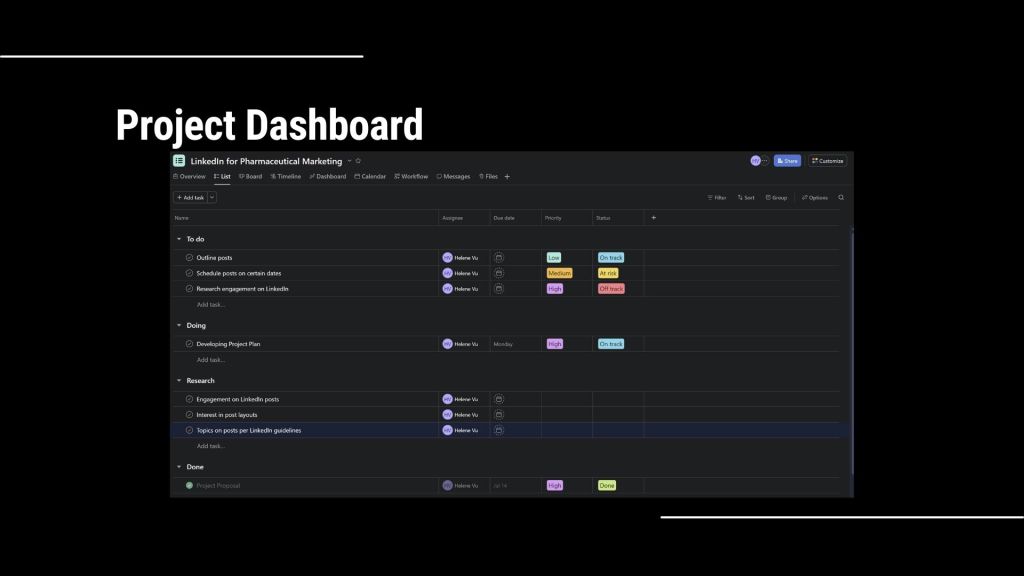
I proceeded to the project planning phase where I started creating a week-per-week timeline for staying on target. By breaking all of it down into a step-by-step process, I was able to know where I was going and was able to see how my project would progress step-by-step in the long term. I used Asana as a way of mapping out my work and setting deadlines, which made the entire process less overwhelming and easier to handle. On top of this, I was continuing with the research and still finding more information and going further into my research, finding new sources that added further depth to my understanding. I also returned and adjusted my bibliography so that I could make sure it was still accurate and up-to-date as I searched for the information that I needed in order to inform my project. This stage wasn’t all about sorting—there was also space to consider, make some slight adjustments, and reach the realization that planning is an ongoing process and not a fixed thing.
Click on the image below to view the timeline.
The Actual Creation
Corresponding blogs: Creating Artifacts and Production Journal and First Time LinkedIn Posting
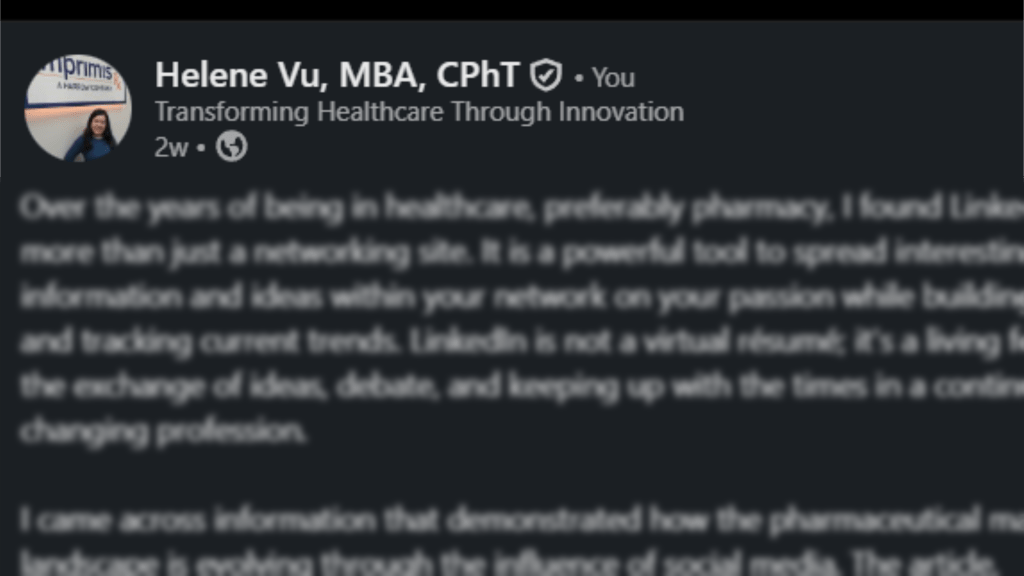
Now comes the fun part: creating! I thought to myself i could try my hand on graphic designing as i know people love fancy images with fancy typography and colors. I had discovered from experience and doing it that people were drawn to powerful photographs with powerful, well-crafted captions and inquired whether I could try the same on my professional career. Having some idea where the design could be going, I proceeded and got to work on the words to go along with it. I composed my post with diligence, then weighed tone, clarity, and concision to ensure that it met my own criteria for my project. Reading three articles on my topic, I attempted to make my message clearer too and to curtail my amount of information to avoid watering down the point. Lastly, I read over my draft multiple times—not so much for typos and mistakes, but so that it was professionally rendered and neat. This was the challenging and creative part, but it enabled me to get some idea of how my thoughts might be molded into readable and engaging material.
Check out my first LinkedIn Post by clicking on the image.
Mistakes Happen
Corresponding blogs: LinkedIn Posting Mistakes, Exposed
A week passed where I thought I could land success, but it turns out to be a “flop”. I reflected on why my first LinkedIn post did not get off the ground since I had posted it on Sunday evening when most workers are off duty. That was a valuable lesson to learn that when I post is just as important as what I post. I then discovered LinkedIn’s post-scheduling feature, went through some of our pharma marketing blogs for inspiration, and formulated my thoughts before composing my next post. To make it even more interesting, I created a GIF from OBS, Vegas Pro, and GIPHY instead of an ordinary image. Finally, I shared the timetable for a Tuesday morning at 9 a.m., which I learned about timing, planning, and creative content in reaching out to a huge base.
Click on the image to read the 2nd post
One Step Further: Video!
Corresponding Blog: LinkedIn Posting Mistakes, Exposed
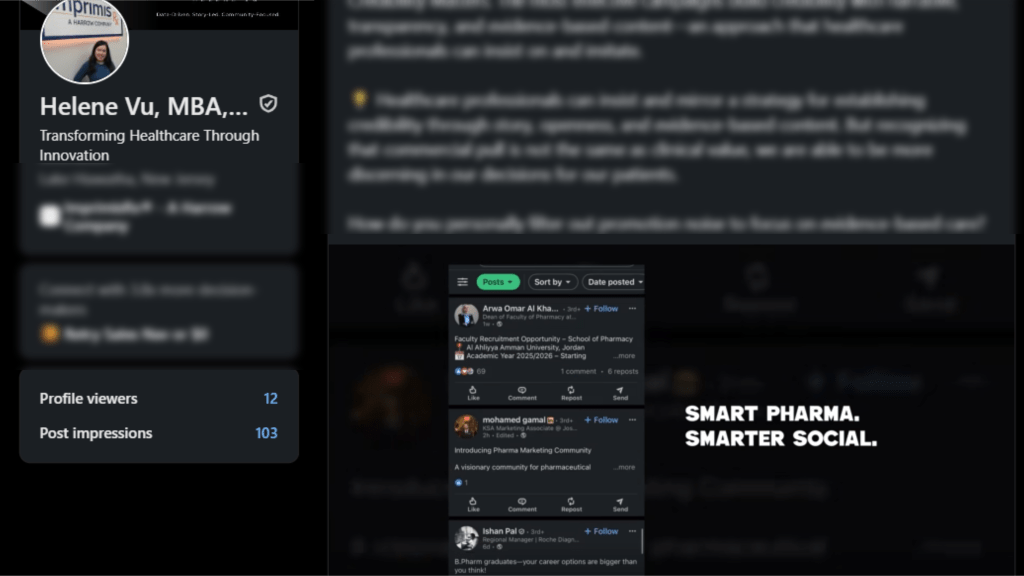
Once I had adjusted my LinkedIn sharing approach, I noticed incremental increases only—higher engagement to some degree, but clicks and impressions remained flat—telling me it takes time, patience, and to see what happens and does not happen in each post. Which gave me a new idea: why not do a video? Since people are drawn to visuals and I have video editing software, I figured I would give it a try. Whereas I had originally considered creating a focus on AI in pharma marketing, research suggested it’s not yet fully developed. Instead, I turned to pharma marketing podcast shows for inspiration—listening to “Drug Promotion, Prescription, and Value” and “Selling Health: The Art of Pharmaceutical Marketing & Sales” and using them to organize my thinking. I recorded myself one Friday afternoon surfing LinkedIn with the hashtag PharmaMarketing, screen-recorded on my iPhone, and edited it into a 10-second teaser using Vegas Pro. I then, with an outline, drafted my post, included the video, and scheduled to post on Tuesday at 9 a.m., maintaining timing consistent to engage my audience in the best way. Interested to see how well this new format performs
Wanna see the awesome video editing? Click on the image below to see!
 My Humble Abode
Leave a comment