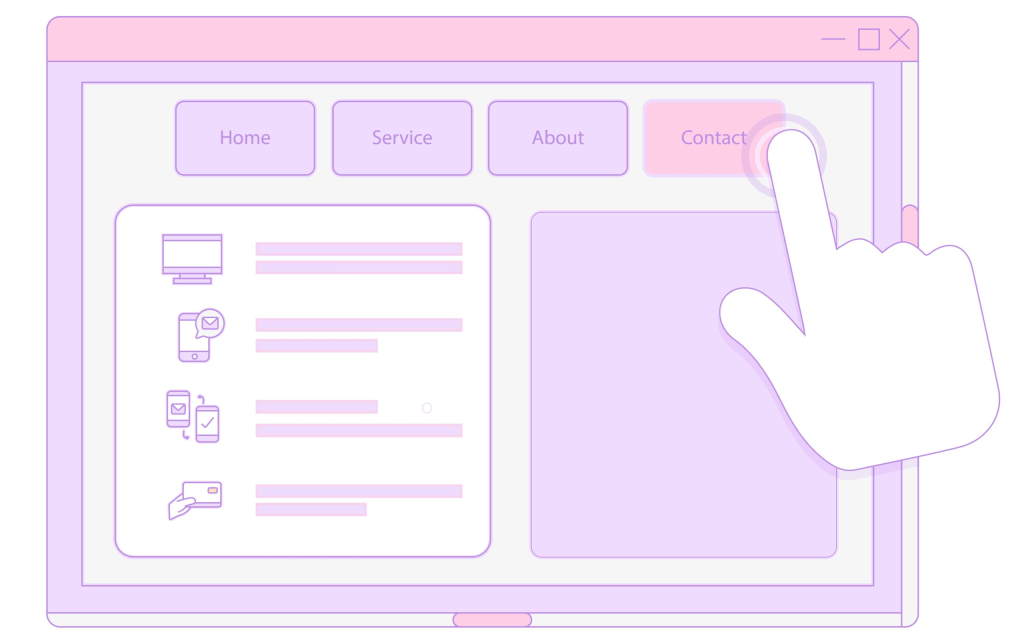
When a user first enters a site or opens an application, they will very quickly determine where they want to go first in order to have the best chance of succeeding or having a difficult time with many questions and no clear direction. The ‘first click test’ is a UX Research technique created to measure that initial decision users make when they enter a website/app.
In simple terms, a first-click test will show whether or not the user can find, without thought, a link to complete their task. If the links are intuitive, the user will find their link to click correctly; if they are not intuitive, they may have to look through many different links to find the appropriate link to click.
UX Research has shown that early navigation choices are very good predictors of the overall success of completing a task. Users who click on the correct link early in the task are more likely to complete their task more quickly and with more self-assurance; users who do not click the correct link are more likely to experience confusion or frustration, and ultimately to abandon the task. Therefore, first-click tests are among the most efficient means of assessing if a design ‘makes sense’ to its intended users.
The Measurements
First click tests aid teams in determining:
- If navigation labels are unambiguous
- If page layouts are easy to navigate
- If users can find important features quickly
- Where errors or confusion develop.
Since it focuses on first time use, first click tests are best for wireframes, prototypes, and the initial phase of the design process.
The Process
- Define “realistic tasks” as being a short scenario that reflects a user’s realistic goal. For example: “Where would you click to track your order?”
- Prepare your interface by using a live site, prototype, or static screenshot; it doesn’t have to have full functionality.
- Recruit representative users; the participants should closely resemble the target audience you are trying to reach.
- Record user’s first click on the design; ask them where they would first click to start tracking their order and record:
- Where the first click occurred
- How long it took to get that first click
- How many people went down a path that was incorrect and how many did not.
- Analyze click patterns by creating clusters of incorrect and delayed clicks, and searching for clusters of hesitation; this will help expose usability problems.
- Iterate and retest
Make changes based on your findings and do another test to verify successful improvements.
Commonly Used Tools
Numerous user experience (UX) teams conduct online remote evaluation testing by using specialized tools for research purposes.
- Optimal workshops are one of the most common remote testing tools, heat maps, and success metrics.
- Usertesting is a platform that enables both moderated and unmoderated testing by creating recordings of the participant’s activity (testing) during the evaluation.
- Maze is an online platform that allows for easy integration of tools used for designing products and testing those products using prototypes.
These solutions allow for automated data collection as well as provide the means to visualize that information, thus allowing each tester to determine the most frequently clicked areas by users.
Reasons why the first click test has gained popularity:
- It can be done very quickly
- It costs considerably less than full usability testing / It’s much cheaper than utilizing full usability testing
- It predicts future success of end-users
- It is useful to use during the early design stage
- It allows teams to fix structural issues before spending substantial time on the development process
Final Thoughts
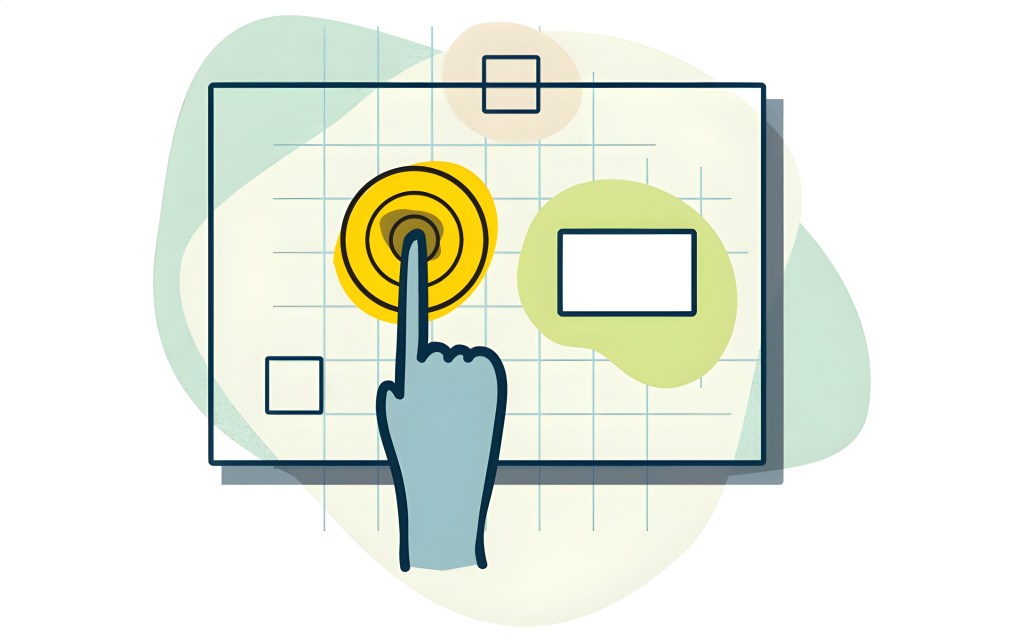
The first click test asks a very simple question: When someone comes to your site can they immediately identify what they need to do next?
To do this, you will want to measure how much guidance a user gets through the first decision they make, since that will determine the remainder of their journey. Since minimal set-up is required and clear results can be obtained from the first click test, it remains one of the most effective and impactful tools for use in user experience (UX) research.
When a user clicks in the right place on your site, you know the design has successfully guided them. When they do not click in the right place, the data from the first click test can be used to help identify the areas you need to make changes to improve their experience.
 My Humble Abode
Leave a comment